Showing posts with label Educational posts. Show all posts

April 20, 2013

Danish birthday traditions

In Denmark, birthdays are very important. The Danish take great pride in their flag, and the flag is usually hung from the window of a house in which someone has a birthday. The birthday cake is often decorated with small Danish flags, the card may be decorated with flag stickers, and a flag is often drawn on the family calendar to indicate a family member's birthday.

If the birthday person is a child, he or she will be asked to make a list of birthday presents he or she would like to receive. The night before the big day, family members will go in his or her room while he or she is asleep and set presents on the bed. A big breakfast is always prepared on the birthday morning.

There are many dishes that could be considered for a Danish birthday celebration. The birthday person will most likely have say in planning the menu. Birthday meals are usually prepared on a large scale. There is often a layer cake. The most important edible creation is the kageman, or cake man, which is a pastry shaped similarly to a gingerbread man. It is traditional for someone to chop the cake man's head off before eating it.

A cake man: credits to danishpastryco.com
If there is to be a birthday party, it will be complete with songs (including the Danish version of Happy Birthday,) speeches, and handshaking, according to hejsonderborg.dk. Some people write songs about the birthday person to the tune of well-known songs. The biggest birthday celebrations occur for birthdays that are multiples of ten (20, 30, etc.) The 50th birthday is a particularly extravagant celebration; some people's 50th birthday parties are even advertised in the newspaper.

If someone makes it to 30 without getting married, he or she is considered a pebersvend (pepper man) or pebermø (pepper woman) and is given a pepper shaker. Sometimes people who make it to 25 without getting married are attacked with cinnamon.

Birthday shoutouts to Sam, Duncan, Lyndon, Ethan, and Uncle Steve

April 14, 2013

Chinese birthday traditions

Families are very important to the Chinese. It is considered one's moral responsibility to have children; a common Chinese saying is that "of all who lack filial piety, the worst is he who has no children," according to chinaculture.org. The elderly are considered important and are highly respected. The biggest birthday celebrations in China are those held for infants and for the elderly.

The birth of a child is extremely important in China. Some conservative women try to hide the fact that they are pregnant so that evil spirits cannot kill the baby. Upon being born, the baby will be given a milk name, which is supposed to confuse evil spirits. A child is considered one year old as soon as he or she is born. The Chinese traditionally celebrate birthdays according to the lunar calendar and believe that everyone turns another year on Chinese New Year. Rather than stating his or her age, one will state the animal year of his birth.

Thirty days after a child birthday, a month-old party known as Moon-Yut is thrown and all the relatives are invited. Among Buddhist families, sacrifices are offered to the gods. The child's parents give gifts to guests, and guests bring gifts, often money, for the baby. Gifts are given in even numbers. Red-dyed eggs can always be found at Moon-Yut; another name for Moon-Yut is the "red egg and ginger" party. Eggs symbolize a harmonious life, and red symbolizes happiness. A child's name is often announced at Moon-Yut. (The milk name is only used for the first month.)

 A child's first birthday is very important. It could be celebrated on his or her first birthday according to the yang li, or Western calendar, or according to the ying li, or lunar calendar; the family can choose, according to go.com. A feast is given for friends and relatives. Long noodles, which represent long life, are served. A large number of items are placed in front of the child. The first item that the child grabs is an indication of her future career. For example, a pen indicates that the child will be a great writer, while a stamp means that he or she will become a high ranking official.

Subsequent birthday celebrations are not as elaborate. Long noodles, red-dyed eggs, and dumplings in the shape of peaches, which represent longevity, are always served on one's birthday. Red envelopes containing money are often given as birthday gifts. Clocks are never given, since the Chinese word for clock sounds similar to the word for death. As people get older, they tend to celebrate their birthdays on Chinese New Year rather than on their actual birthday. Every twelve years, one's birthday occurs during the same animal year as one's birth; these are considered important birthdays. 30, 33, and 66 are considered unlucky years for women. On a woman's 33rd birthday, she must chop a piece of meat 33 times and then throw it away; it is believed that this casts evil spirits into the meat. On her 66th birthday, her daughter (or, if she has no daughters, closest female relative,) must chop a piece of meat 66 times. 40 is considered an unlucky age for men.

60 is an extremely important age. At 60, the animal year as well as elemental year (the elemental zodiac is five year cycle, with years representing metal, wood, fire, water, and earth) are the same as one's year of birth. 60 is considered an entire life cycle. Adult children usually throw a large feast for their parents' respective 60th birthdays. Long noodles and peach shaped dumplings are always served, and everyone at the feast eats both as a way of expressing their well-wishes to the birthday person. Gifts include red envelopes containing money, eggs, and more long noodles and peach shaped dumplings. After 60, large birthday feasts are given every ten years.

Birthday shoutouts to Joseph and Magdalen

April 6, 2013

Janmashtami

Janmashtami is the Hindu celebration of Lord Krishna's birthday. It is always celebrated on the eighth day of the waning moon during the Hindu month Shravan, which is in August and/or September. In 2012 Janmashtami was celebrated on August 10.

Krishna is considered to be the most important human incarnation of Lord Vishnu. According to legend, he was born at midnight on the eighth day of the waning moon during Shravan around 5200 years ago in Mathura. His purpose in coming to earth was to free earth from evil, according to calendarlabs.com. Krishna is portrayed as pious yet mischievous, and loving and understanding to all people.

Krishna's birthday is celebrated all over India. The biggest celebrations take place in Mathura and Vrindavan, cities in which Lord Krishna spent his childhood. Devotees all over the world flock to these cities to participate in Janmashtami. People fast until midnight and chant Hindu mantras. Homes and temples are decorated. At temples, people perform kirtan (singing Lord Krishna's name with other devotees ) and japa (private prayer.)  A feast of over a hundred dishes is prepared for Krishna. Some children dress up as Lord Krishna.

The most important part of the celebration occurs in the temple at midnight, since that is the time at which Lord Krishna was born. A statue of baby Krishna is bathed with a mixture of holy water from the Ganges River, milk, ghee, curd, and honey poured from a conch shell, then placed in a cradle.

Rejoicing continues into the second day. Devotional songs and dances are performed to honor Krishna. Reenactments of important events of Krishna's life take place in temples. In cities, dahi handi (large earthen pots) are filled with milk and curd and hung from tall poles, and devotees form a human pyramid to try to break the dahi handi. This reenacts a time in Lord Krishna's childhood when he managed to grasp a pot containing curd that had been placed out of his reach.

A human pyramid: credits to about.com
Members of the Hindu community look forward to Janmashtami every year. People love Lord Krishna, who was the main propagator of the theory of good karma. It is believed that he will reciprocate any love and devotion that is offered to him.

April 4, 2013

Tet

Tet, Vietnamese New Year, is the most important holiday for the Vietnamese. Everyone celebrates their birthday on Tet, according to birthdaycelebrations.net. The actual date of Tet depends on the lunar calendar and varies from year to year, though it always coincides with Chinese New Year, which takes place in January or February. Vietnamese New Year is a time to get together with family and celebrate one's ancestors and culture.

Tet officially lasts three days, but the preparations begin a week in advance. A week before New Year's Eve, family members clean the house. Some families even repaint the house. It is believed that cleaning the house gets rid of bad fortunes from the old year. That night, the family offers a farewell ceremony to the Kitchen God, who is known as Ong Tao. The Vietnamese believe that Ong Tao goes to the Heaven Palace to report on the family to the Jade Emperor.

On Giao Thua, New Year's Eve, family members offer a ceremony to welcome Ong Tao back to earth, as well as to bid farewell to the old chief and welcome the new chief. The chiefs are the same twelve animals from the Chinese zodiac; the chief for 2013 is the Snake. Vietnamese children say what chief they were born under rather than saying how old they are. At the stroke of midnight, family members beat drums, light firecrackers, and encourage dogs to bark to welcome the new year.

Tet is a holiday to honor family and ancestors. On New Year's Day, family members gather in their hometowns. Incense is burned in honor of deceased family members. Traditionally, people visit close friends and parents on the first day of Tet. On the second day, people visit in-laws and other friends. Distant relatives are visited on the third day. There is a belief that the wealth of the first visitor on Tet will determine the family's luck for the entire year, so families try to invite wealthy people to their homes. Children wear their best clothes and everyone is on their best behavior, since the Vietnamese believe that one's actions during Tet influence a family's luck for the entire year.

Tet decorations are very important and symbolic. The plate of five fruits represents the five basic elements: metal, wood, fire, water, and earth. The fruits are arranged in a pyramid, and the plate is sometimes decorated with flowers.

A five fruits plate: credits to missouri.edu
 Parallel sentences are hung by the door. A pair of parallel sentences contain the same number of words, with contrasting or corresponding meanings. An example of a parallel sentence is "On the New Years’ Eve, pay debts on all sides; bending your legs, kick out poverty. On New Years’ day, rice wine makes you drunk; stretching your arms, carry in wealth" (credits to missouri.edu.) A piece of bamboo, known as a Cay Neu or New Year's Tree, is raised in the front yard and decorated with bells, clay fish, and thorny branches. It is taken down after seven days. Flower symbolize new beginnings, so many homes are decorated with flowers during Tet. Peach flowers and apricot flowers are the most popular.

Traditional Tet foods include banh chung (sticky rice cake) and pickled onions. Pork dishes, sugarcoated coconut, and boiled chicken are also common. Eating is an important part of Tet. The Vietnamese expression an Tet (to eat the Tet) refers to the tradition of celebrating Tet with a feast for the entire family.

A very important tradition is the presentation of sealed red envelopes. Older people give red envelopes to younger people to congratulate them on being another year older, as well as to remind them to live harmoniously with others. The envelopes contain li xi, lucky money.

Birthday shoutouts to Nathan and AJ. Sorry it took me so long to do these birthday shoutouts!

March 23, 2013

Shichi-go-san

Shichi-go-san is Japanese for "seven-five-three," and the shichi-go-san festival is a Japanese festival honoring the good health and growth of all three-year-old girls and boys, five-year-old boys, and seven-year-old girls. The festival takes place on November 15th and is marked by families with seven, five, and three-year-olds visiting shrines. Odd numbers are considered lucky, 15 is the sum of 7, 5, and 3, and November 15th is considered the most auspicious date of the Japanese calendar. Since this date is not a national holiday, people usually visit the shrine on the nearest weekend.

During the Heian period (794-1185,) the child mortality rate was high in Japan. During this time period, members of the aristocratic class and the samurai class began having celebrations for children who lived to be three, five, and seven, which, being odd numbers, were considered lucky ages. By the Edo Period (1603-1868,) commoners had shichi-go-san celebrations for their children as well.

Three, five, and seven are all milestone ages for Japanese children. During the samurai era, children had their heads shaved until they reached the age of three. A child's first shichi-go-san after his or third birthday marked the first time he or she could grow hair and was referred to as kamioki, which means "putting on hair." A boy could start wearing hakama, formal Japanese pants, at age five, and his first shichi-go-san after his fifth birthday was called hakamagi-no-gi. Upon turning seven, a girl could tie her kimono with obi (a traditional sash) rather than strings, and her first shichi-go-san was called obitoki-no-gi.

Kamioki is no longer observed, and some families dress their children in Western-style suits and dresses rather than having hakamagi-no-gi and obitoki-no-gi, but shichi-go-san is still a very meaningful celebration for the Japanese. Some children have photo sessions taken for their shichi-go-san. Girls get their hair and makeup done. On the big day, the children's families visit the shrine and the kan-nushi (Shinto priest) blesses the children and recites a long prayer to a Shinto god asking for protection of the children. The family members participate in the prayer ceremony as well. After the ceremony, the priest gives the children omamori, which are good luck charms, according to iromegane.com.

Children on their way to the shrine for shichi-go-san: credits to english-ch.com
 After visiting the shrine, parents buy their children chitose-ame, which means "thousand years candy." Chitose-ame are long red and white sticks. Red and white are lucky colors, and long sticks symbolize long life. The candy sticks are carried in bags decorated with pictures of turtles and cranes, two long-living animals that also represent long life.

Birthday shoutouts to Mattie, Cy, and Caitlin

March 18, 2013

Zodiac signs

The word "zodiac" comes from a Latin word that means "circle of animals." The zodiac is a circle of constellations that line the ecliptic path of the sun. It is divided into twelve equal segments. The moon and planets are also included in the zodiac. Many people draw significance from their zodiac sign, which corresponds to the constellation the sun aligns with at one's time of birth. A list of the twelve zodiac signs and their meanings can be found at psychicguild.com.

A zodiac chart: credits to minglecity.com
The Babylonians are usually credited with the origin of the idea of zodiac signs. They believed that a person's birth month influenced their personality and noticed that the stars were in certain positions at the same time each year. They used astrology to predict and explain wars and natural disasters. The Egyptians divided the ecliptic into twelve sections which are now the twelve zodiac signs. The Greeks discovered astrology around the 4th century. It later spread to the Romans, who gave the constellations of the zodiac the names they have today. Throughout the next century and a half, astrology fell in and out of popularity. Many religious groups disliked it. Today, astrology is not considered an actual science but is still studied thoroughly by some people. Many people enjoy reading their horoscopes though they may not take them seriously. There are many beliefs on how zodiac signs can shape one's personality and on how compatible different zodiac signs are with each other. A zodiac sign compatibility analysis can be found at eastrolog.com. For a complete astrological analysis of one's birth date, one must not only consider one's sun sign but also the constellations to which the moon and each planet correspond. According to twelveplanets.com, one's sun sign represents one's character, a moon sign represents one's thinking process and manner of communication, and Venus represents artistic abilities and love. Outer planets represent an entire birth generation rather than an individual. The rising sign, which corresponds to the constellation that was rising in the east at a person's time of birth, represents how a person approaches new things. A free astrological chart analysis can be found at alabe.com.

The zodiac does not lie perfectly in a plane with the ecliptic. Due to this fact, the time of year traditionally corresponding to each zodiac sign does not correspond with that sign's constellation. It takes about 2000 years for the ecliptic to shift over one constellation. During the time of the ancient Babylonians, the sun rose against Aries during the spring equinox (which is considered the beginning of the zodiac.) However, throughout the next two millenniums it began to rise against Pisces and is now beginning to rise against Aquarius. The current astrological age is referred to as the Age of Aquarius. It will take around 26000 years for the ecliptic and the zodiac to line up perfectly again, according to astro.com. This difference between the sun's path and the zodiac has led to two forms of astrology: tropical astrology, which is based on the seasons in the year, and sidereal astrology, which is based on the actual positions of the stars. The sidereal zodiac has a thirteenth constellation, Ophiuchus, between Scorpio and Sagittarius. The tropical zodiac is used in Western astrology and is the zodiac used in horoscope charts. The sidereal zodiac is used in Indian and Vedic astrology.

The zodiac can be divided into three groups of four signs. Cardinal signs, Aries, Cancer, Libra, and Capricorn, represent the equinoxes and solstices and stand for dynamic change. Fixed signs, Taurus, Leo, Scorpio, and Aquarius, stand for stability. Mutable signs, Gemini, Virgo, Sagittarius, and Pisces, stand for more gradual change. Zodiac signs can also be divided into four groups of three signs: earth signs (Taurus, Virgo, and Capricorn,) air signs (Gemini, Libra, and Aquarius,) fire signs (Aries, Leo, and Sagittarius,) and water signs (Cancer, Scorpio, and Pisces.) Additionally, zodiac signs can be divided into male and female groups.

Birthday shoutouts to Joseph and Uncle Andrew

March 10, 2013

Bar mitzvah and bat mitzvah

Bar mitzvah means "son of the commandments" in Aramaic, which was once the vernacular language of the Jewish people. Upon becoming bar mitzvah, a boy is obliged by Jewish law to follow the commandments in the Torah. He can count in a minyan, the minimum number of people required to say certain prayers. A boy automatically becomes bar mitzvah upon turning thirteen. However, it is popular to have a ceremony to celebrate this important milestone in a Jewish boy's life.

The Talmud, compiled during the centuries following the publication of the Mishnah, the first published work of rabbinic law, around the year 200, is a set of documents that comment on the Mishnah. According to the Talmud, boys were able to perform many mitzvot (commandments,) even prior to becoming bar mitzvah. By the Middle Ages, children were no longer allowed these responsibilites, and a coming of age ceremony to celebrate a boy's first aliyah (recitation of blessings on the Torah) made sense. By the 16th century it was common to call a boy up to the Torah on the Sabbath following his thirteenth birthday. In the 17th century, bar mitzvahs in Germany chanted the entire Torah portion. A feast at the boy's parents house was eventually added to the ceremony. In Poland, it was common for a boy to give a drasha (discourse) in talmudic law during the feast.

Modern bar mitzvah ceremonies vary depending on the boy's family and synagogue and the movement of Judaism to which his family belongs. The ceremony usually takes place during the first Sabbath service following the boy's thirteenth birthday. He is called up to recite the aliyah. He may read some or all of the Torah reading, and traditionally reads the maftir, which is the final portion. Sometimes he chants the haftarah, the weekly prophetic portion associated with the weekly Torah portion. Often, the boy's father recites a blessing stating that he is no longer responsible for his son's decisions. It is common for the boy to give a speech following his Torah reading that relates to the reading in some way. He may also announce a mitzvah project, which is an in-depth study of one of the 613 mitzvot in the Torah.

A boy reads from the Torah during his bar mitzvah ceremony: credits to mathiasphotography.com
 The service is usually followed by a large scale reception. In some communities, bar mitzvah receptions are as large as wedding receptions. There is no rule about what type of presents to give. Family members often give presents that have something to do with the boy's faith. Tefillin, black leather boxes containing parchments inscribed with passages from the Torah, are a common present, according to chabad.org. Tefillin are worn on the head and the arm with leather straps during weekday morning services. Wearing tefillin is one of the mitzvot, and a boy usually has not worn tefillin prior to becoming bar mitzvah. Monetary gifts in multiples of 18 are common. The number 18 represents good luck and the Jewish symbol chai, which means life.

Preparation for a bar mitzvah can begin up to eighteen months in advance. The boy studies the mitzvot and learns to chant the haftarah. He prepares a speech and learns how to lead the service. Often, a boy attends bar mitzvah lessons prior to the big day. These lessons help him understand what it means to be Jewish and the importance of becoming an adult in the synagogue. It is important to know that a bar mitzvah is not the end of one's Jewish education, but rather the true beginning of Jewish life. Some rabbis ask bar mitzvahs to sign an agreement stating that they will continue their Jewish education.

Bat mitzvah means "daughter of the commandments." A girl becomes bat mitzvah upon turning twelve. Traditionally, Jewish women were not allowed to participate directly in religious services. That began to change in the early 20th century. The first bat mitzvah in America was given by Rabbi Mordecai Kaplan, a leader in the Jewish reform movement, for his daughter Judith in 1922, according to about.com. Judith was allowed to read from the Torah when she became bat mitzvah, but the ceremony was not as complex as bar mitzvah ceremonies of that time. Over time, bat mitzvah ceremonies became more widespread. In liberal Jewish communities today, they are very similar to bar mitzvahs . In Orthodox Jewish communities women are still not allowed to participate in religious services, and a bat mitzvah ceremony may consist of the girl reading from the Torah during an all-women's prayer service.

A boy automatically becomes bar mitzvah upon turning thirteen, and a girl automatically becomes bat mitzvah upon turning twelve. A ceremony is not necessary; however, it helps many people understand the importance of this life event. Sometimes, men who did not have bar mitzvah ceremonies when they turned thirteen feel incomplete and have a bar mitzvah as an adult. Many women who grew up before bat mitzvahs were widespread had adult bat mitzvahs.

Birthday shoutouts to Sophie and Toni

March 8, 2013

Birthstones

A birthstone is a gemstone associated with a month. Some believe that a birthstone has special healing powers, especially when worn by a person born during its assigned month. Each birthstone is supposed to represent certain values; for example, my birthstone, ruby, represents love, success, and integrity. A list of birthstones and their meanings can be found at earthsky.org.

Some months are associated with more than one birthstone, and there is no fixed birthstone list. Nineteen birthstones are officially recognized by the American Gem Trade Association. Seventeen are recognized by the American Gem Society.

A chart of the most commonly recognized birthstones: credit to gatorgirlrocks.com
Birthstones have a long history. The first mention of associating a gem with each month is in the Bible. The breastplate of Aaron, Moses's brother, was said in Exodus to be decorated with twelve stones, each stone representing one of the twelve tribes of Israel. The gemstones were later associated with the zodiac signs and the months of the year.

Different cultures have different birthstone lists. Gems4friends.com provides lists of modern, traditional (dating back to the 15th century,) mystical (ancient Tibetan,) and Ayurvedic (Indian medicinal) birthstones. There is also a list of stones associated with each zodiac sign. Traditional birthstones are often the same color as their modern counterparts. This is due to the fact that people could tell the difference between stones of different color long before they understood the mineral composition and rarity of different stones.

Birthstone jewelry is an excellent birthday present, though some birthstones, particularly rubies, diamonds, emeralds, and sapphires, are more expensive than others due to their rarity. A large selection of birthstone jewelry can be found at jewelrycentral.com.

Birthday shoutouts to Isaac, Leah, and Christine. Sorry it took me so long to do these birthday shoutouts! I was out of town last weekend.

February 23, 2013

History of birthday parties

There has not always been a way to keep track of one's date of birth. Calendars were developed when people began to understand lunar cycles. With the advent of the calendar, people were able to celebrate the anniversary of someone's date of birth.

Before the birth of Christianity, pagan cultures believed that evil spirits came to visit a person on their birthday. To protect themselves from the spirits, people surrounded themselves with friends. Noisemakers were used to scare the spirits away. Gifts provided additional cheer to ward off evil.

Few records of ancient birthday celebrations exist. The only documented birthday celebrations were for royalty and nobility. Historians believe that only the wealthiest people could afford to throw birthday parties in ancient times, and that that may be the reason why people sometimes wear crowns on their birthdays.

Children's birthday celebrations originated in Germany. The Germans called children's birthday celebrations kinderfeste, which means "children's party." 

Birthday cakes originated in Greece. The ancient Greeks took round cakes to the temple of Artemis, the moon goddess. Candles were placed on the cake so that it would glow like the moon. The word "cake" was coined around the 13th century and comes from the Norse word kaka. The Germans gave children sweetened dough in the shape of baby Jesus in swaddling cloth on their birthdays. They placed one candle in the center of the cake to symbolize the light of life. In medieval England, people put small objects such as thimbles, coins, and rings in the cake batter. These objects served as fortunetellers for birthday party guests. For example, it was believed that the person who got the slice with the cake with the ring would marry in the coming year.

Birthday candle superstitions are believed to have originated with the ancient Greeks as well. They believed that smoke from birthday candles would help send prayers to the gods. Today, people often make a wish before blowing out birthday candles. If one blows out all the candles at once, one will get his or her wish. It is popular for children to have the same number of birthday candles as the age one is turning, plus one extra for good luck. Children also enjoy candles in the shape of numbers.

The song "Happy Birthday" was written by two sisters, Mildred J. Hill and Dr. Patty Smith Hill, in 1893. Mildred was a teacher at Louisville Kentucky Experimental Kindergarten, and Patty was the principal. The original song was titled "Good Morning To All" and was included in a book of children's songs. The second verse, which is the birthday song we know now, was added later. There was controversy over whether it was written by Patty or by a man named Robert Coleman. Dr. Hill took Coleman to court, and it was proven that she and her sister owned the song and were entitled to royalties. Over time, the second verse became more popular than Good Morning To All, and it received a huge boost in popularity when it was included in the Broadway musical As Thousands Cheer in the late 1930s. Warner Communications purchased the song in 1989. If the song is to be used for profit, royalties must be paid to Warner Communications. For this reason, many restaurants have their own birthday songs. Happy Birthday is one of the three most popular songs in the English language. It is sung all over the world. There are versions in other languages, but sometimes the English version is sung even in countries where English is not a primary language.

Birthday cards originated about a hundred years ago in England. If one could not wish a friend happy birthday in person, he or she sent a card as an apology. Nowadays cards can be given in person or sent, and they can be store bought or handmade. Several examples of handmade cards can be found at Cats From Mars. Birthday e-cards have also become popular in the past decade.

Birthday shoutouts to Rachel, Meghan, Matt, and Elliott

February 16, 2013

Presidents' Day

George Washington was born on February 22, 1732. He served in the French and Indian War, was a member of the Second Continental Congress and a general in the American Revolution, and went on to become the first president of the United States, serving from 1789 to 1797. He is remembered as a Founding Father and one of the best known politicians in American history. The United States capital is named for him, and his image is used on the dollar bill and the quarter dollar coin. His birthday is celebrated on the third Monday in February every year.

Washington's birthday was unofficially observed for most of the 1800s, and it was first celebrated as an official holiday in Washington D.C. in 1880. However, the holiday only applied to the District of Columbia. Five years later, President Chester A. Arthur signed a bill establishing Washington's Birthday as a federal holiday. Lincoln's birthday, February 12 (he was born the same day as Darwin!), was also celebrated in many states beginning in the late 1800s. In the early 1950s, the National Association of Travel Organizations suggested that Washington and Lincoln's birthdays be combined to a single "Presidents' Day" celebrated on the third Monday of February, and that several other federal holidays be moved to designated Mondays rather than fixed dates. In 1968, the Uniform Holidays Bill passed. This bill allowed Americans more three-day weekends. Washington's Birthday, Memorial Day, and Veterans Day were moved to designated Mondays, and Columbus Day, also a designated Monday, was established. (Veterans Day was moved back to a fixed date, November 11, several years later.) However, Washington's Birthday and Lincoln's birthday were not combined into Presidents' Day.

The third Monday in February is known as Washington's Birthday at the federal level. However, most states recognize it as Presidents' Day. Not all states celebrate Presidents' Day on the same day as the federal holiday. Some states still celebrate Lincoln's birthday separately, some only celebrate Washington's birthday, some combine them into a single Presidents' Day, and some celebrate neither. Some states even celebrate Presidents' Day during a different month.

Since Washington's Birthday is a federal holiday, federal offices are closed on the third Monday in February and mail is not delivered. Some schools and stores are closed. Other stores feature Presidents' Day sales. A list of Presidents' Day sales can be found at dealspl.us. Some communities stage reenactments of Washington and Lincoln. According to the Huffington Post, many babies born on Presidents' Day are named for presidents. Presidents' Day is one of two days on which the Main Reading Room of the Library of Congress is open to the public.

Birthday shoutouts to Zoe, Aaron, Kaylee, and Ian

February 10, 2013

Darwin's birthday

Charles Darwin was born on February 12, 1809, in Shrewsbury, England. He was the fifth of six children. His father was a doctor, and his grandfather was a botanist. His mother died when he was eight years old. Darwin had a fascination with natural science from a young age. His father hoped that Charles would become a doctor like him and enrolled him at Edinburgh University when he was sixteen; however, Charles Darwin could not stand the sight of blood. He left Edinburgh and enrolled at Christ's College in Cambridge at age eighteen, but soon realized he would rather study natural history than become a member of the clergy.

After graduating from Christ's College in 1831, Darwin was recommended for a naturalist position on board the HMS Beagle. The ship was to make a five-year survey trip around the world. Darwin had to convince his father to allow him to go. The voyage was a life-changing experience to Darwin. He observed similarities and differences between different species. Species native to the Galapagos Islands were of particular interest to him. After returning home, he spent over twenty years continuing his research and compiling his ideas into a book. He married his cousin Emma Wedgewood and had ten children. Their second child, Anne, died from tuberculosis at age ten, causing Darwin to question his faith.

In 1859, Darwin's most famous work, On the Origin of Species by Means of Natural Selection, was published. This book discussed natural selection, the idea that some species possess traits that increase their likelihood to survive and that species with these traits will become the most common over time. A more extensive definition can be found at visionlearning.com. Over a decade later, Darwin published another book, Sexual Selection and the Descent of Man. His books contributed much to the study of evolutionary theory. To this day his name is closely associated with the theory of evolution and natural selection.

Darwin's birthday is celebrated in many different ways around the world. The biggest celebrations took place in 2009, Darwin's 200th birthday and the 150th anniversary of the publication of The Origin of Species. Some schools teach students about Darwin on his birthday. Many college campuses have birthday parties for Darwin, often involving guest speakers and Darwin impersonators.

A birthday cake for Darwin in 2005: credits to sbc.edu

One Darwin impersonator, Richard Milner, turns Darwin into a singing comedian in his one-man musical, Charles Darwin: Live & In Concert, according to the New York Times.

The theory of natural selection has sparked controversy among religious groups, especially those who believe that evolution should not be taught in schools. Some of these groups celebrate "Question Evolution Day" on Feburary 12th, according to christianpost.com. 

"Darwin Day" is officially recognized by the American Humanist Association. More information on Darwin Day, including a list of Darwin Day events, can be found at darwinday.org.

Birthday shoutouts to Addy and Sophia

February 2, 2013

Sweet sixteen

Sixteen is considered an important age. At sixteen, one can drive and work. In the olden days, sixteen was considered a marriageable age. Sweet Sixteen parties have recently become popular in the United States due to the popularity of the MTV show My Super Sweet Sixteen. However, the tradition goes back several centuries. The term sweet sixteen was coined in the late 1500s. The parties go back to the 1700s. At that time in England, young women in the upper class were presented to the royal court during debutant balls as potential brides for men of high standing. The ceremony symbolized the fact that a girl could now marry and start a family. This is no longer true, but many girls still enjoy Sweet Sixteen parties. Nowadays, some boys have Sweet Sixteens; however, the tradition is still much more common among girls.

There is no fixed set of Sweet Sixteen traditions. The girl usually gets dressed up. A large selection of Sweet Sixteen dresses can be found on missesdressy.com.

A Sweet Sixteen dress: credits to missesdressy.com.
Some Sweet Sixteen parties borrow traditions from Quinceañeras; for example, the Changing of the Shoes sometimes takes place at a Sweet Sixteen party. This is especially common among Latina girls who choose to have a Sweet Sixteen rather than a Quinceañera. Sometimes a girl receives a family heirloom at her Sweet Sixteen. She often wears a tiara and participates in a father-daughter dance. Dances can range from waltzes to hip-hop.

One popular tradition is the candle-lighting ceremony. Sixteen candles are lit on a large cake. Each candle represents an important person (or, in some cases, people) in the birthday girl's life. The first candle represents her parents, the second represents her siblings, candles three through six represent extended family members, candles seven through fourteen represent the birthday girl's friends, the fifteenth candle represents her best friend, and the sixteenth candle represents her boyfriend or another close male friend. Sometimes a seventeenth candle is added for good luck. Candles are often lit by the people they represent.

Sweet Sixteen parties can be formal or informal, and they can be large or small. There are a countless number of themes one could consider. Several are listed on ehow.co.uk. Preparations for a Sweet Sixteen must be made well in advance, what with selecting a theme, buying outfits based on that theme, renting a space, and hiring a DJ. In this way, Sweet Sixteens are similar to Quinceañeras.

Some people believe that girls focus more on the party itself than on what it symbolizes. For this reason, many Latino parents are sad when their daughter chooses to have a Sweet Sixteen rather than a Quinceañera. 

Birthday shoutouts to Darcy and Henry

January 27, 2013

Quinceañera

A quinceañera is a Latina girl's traditional fifteenth birthday celebration. The word comes from the Spanish words quince (fifteen) and año (year.) It symbolizes the girl's transition from childhood to womanhood and the renewal of her faith. Quinceañeras are celebrated in many parts of Latin America, particularly Mexico. Latina girls in the United States often have quinceañeras as well. Quinceañera traditions vary from place to place.

The tradition is believed to go back to the Aztecs. Aztec girls were not considered to be a part of society until around age fifteen, when they prepared for marriage. Older women in the community taught women's tasks to young girls. Once the preparation was complete, a coming-of-age ceremony would take place. When the Spanish conquered Mexico, they brought Christianity to the indigenous people. Over time, a Christian aspect was added to the coming-of-age ceremony.

Preparations for a quinceañera often begin months in advance. The girl (who is known as a quinceañera herself) must select her damas and chambelanes (girls and boys, typically friends or relatives, who will accompany her during the ceremony) and rehearse for the traditional dances. A girl traditionally has fourteen damas and fifteen chambelanes (one chambelan is her personal escort,) each dama representing one year of her life. However, some girls choose to have only damas or only chambelanes. Sometimes a girl takes classes at her church dealing with her faith and her relationship with God, according to therosedress.com. A hall must be rented, guests must be invited, a dress must be bought, and the menu must be planned. Quinceañeras are typically very expensive.

There are two parts to a quinceañera, the Mass and the reception. The Mass is known as Misa de Accion de Gracias (thanksgiving Mass.) The girl wears a full-length dress. It is usually white or pastel-colored. At the beginning of the Mass, the quinceañera walks up the aisle escorted by her parents and padrinos (godparents) and followed by her court (the damas and chambelanes.) The quinceañera sits or kneels on a pillow in front of the altar. The priest blesses her gifts and gives a sermon on faith and the girl's new role as a woman in her church community. The girl renews her baptismal vows, gives thanks for fifteen years of life,  and receives gifts, including a tiara, a scepter, a Bible, and jewelry. The tiara symbolizes the fact that the girl is a princess before God. The scepter symbolizes authority and responsibility. At the end of the Mass the girl places a bouquet on the altar to honor the Virgin Mary and younger family members pass out bolos (favors) to the congregation. The court then attends a photo session.

A Quinceañera Mass: credits to Wikipedia
 At the beginning of the reception, the Changing of the Shoes takes place. The birthday girl sits in a chair and her mother or father removes her flat shoes and puts on her high heels, symbolizing her transition into womanhood. She then waltzes with her father.

The vals (waltz) is a very important part of the reception. It begins with the birthday girl dancing with her father. She then dances with her chambelan escort and is eventually joined by her entire court. The court practices the vals for months prior to the quinceañera. Another popular tradition is the presentation of la ultima muñeca (the last doll.) The doll often wears a tiny version of the birthday girl's dress and represents the end of childhood. Sometimes the quinceañera gives the doll to a younger girl in the family; sometimes she keeps it.

The reception is typically a lavish celebration. There is a multi-layered cake that is often decorated in the color of the girl's dress. The quinceañera's father gives a brindis (toast) to his daughter. Then the fifteen candles on the cake are lit. Sometimes each candle is lit by a different guest. Quinceañeras are celebrated differently in different places, but no matter what, a quinceañera is a birthday that a girl will never forget.

Birthday shoutouts to Mom

January 21, 2013

Martin Luther King Jr. Day

Martin Luther King, Jr. was born on January 15, 1929 in Atlanta, Georgia. His father was a pastor. King Jr. was very intelligent and graduated from high school at age fifteen. He studied at Morehouse College, Crozer Theological Seminary, and Boston University, receiving his Ph.D. in 1955. By then he was the pastor of a Baptist church in Montgomery, Alabama. He married Coretta Scott, a woman he had met while in Boston.

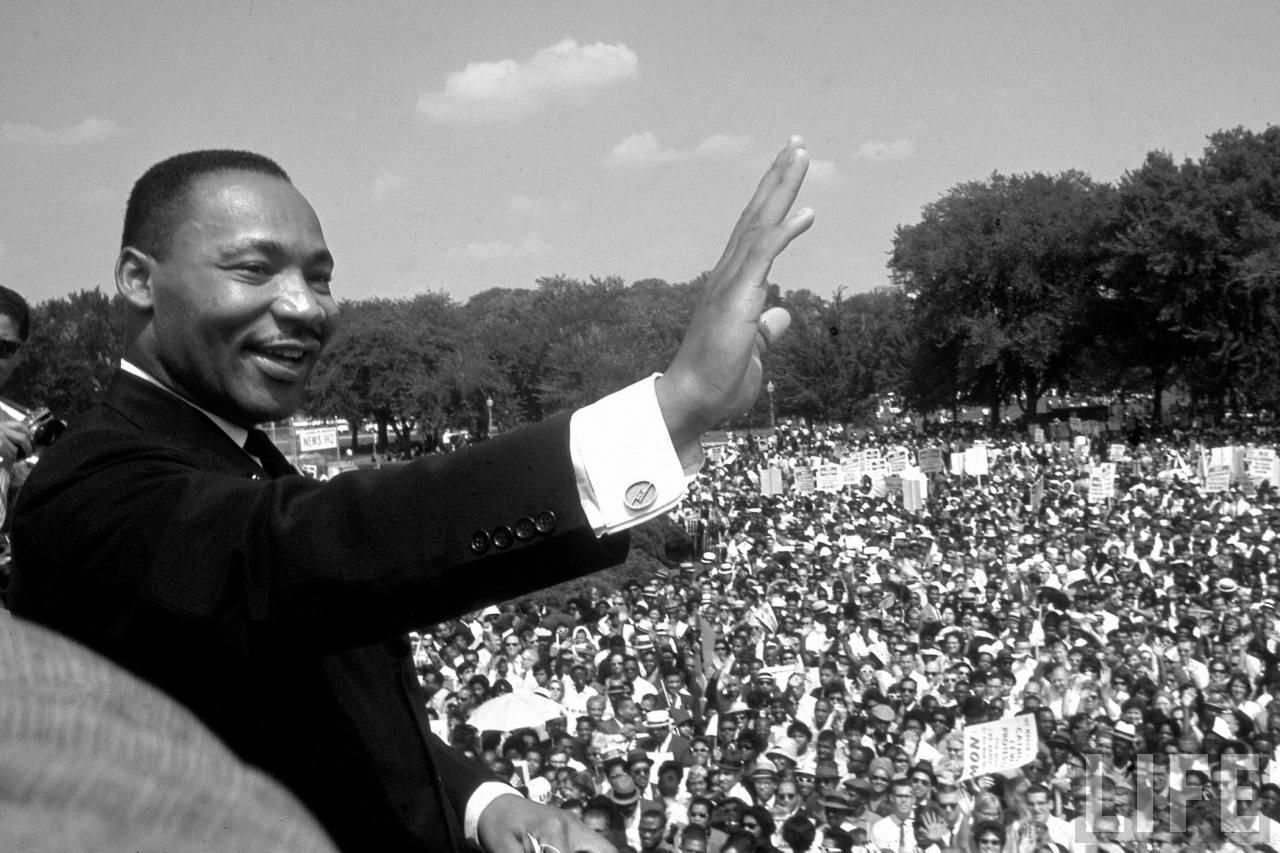
King Jr. had always been concerned with civil rights. He became a member of the executive committee for the NAACP and led a boycott of the segregated Montgomery bus system that lasted over a year and led to the desegregation of the bus system. In 1957, King Jr. became president of the Southern Christian Leadership Conference, a civil rights organization that took its ideas from Christianity. He spent the next eleven years traveling and speaking to promote civil rights. He led the March on Washington in 1963, during which he gave his famous "I Have A Dream" speech.

Martin Luther King Jr.'s "I Have A Dream" speech during the March on Washington: credits to aphelis.net
 He supported non-violence and used civil disobedience to get his message across. He was arrested many times. King Jr wrote five books, was named Time magazine's Man of the Year in 1963, and became the youngest man to receive the Nobel Peace Prize in 1964. He donated his prize money to the civil rights movement. On April 4, 1968, he was assassinated, shocking the nation.

Four days after the assassination of Martin Luther King, Jr., an African-American Democratic congressman from Michigan named John Conyers proposed a bill that would declare January 15 a federal holiday in King Jr.'s memory. The bill was met with resistance in Congress, but Conyers re-introduced it at each new legislative session. In the 1970s, cities, beginning with New York City and St. Louis, began commemorating King Jr.'s birthday. In 1974, Illinois was the first state to celebrate MLK Day as a state holiday. In 1981, Stevie Wonder released a song, "Happy Birthday," to support the idea of a federal holiday honoring MLK Jr. Wonder and Coretta Scott King presented a petition with six million signatures supporting the federal holiday to Congress the following year. Congress passed the holiday bill in 1983. The date was moved from January 15 to the third Monday of January. President Reagan signed the bill, and the federal holiday went into effect in 1986. However, Arizona boycotted MLK Day until 1992, and it was not until the following year that it was recognized as a state holiday in all fifty states.

MLK Day can be celebrated in many ways. Some schools get the day off. Other schools teach children about Martin Luther King, Jr. and how he helped our nation. Some people like to participate in service projects on MLK day. Information on these projects can be found at mlkday.gov. "A day on, not a day off" is a common saying, according to this website.

Today was a particularly special Martin Luther King Jr. Day, as it was also the day of President Obama's second inauguration. People gathered at Ebenezer Baptist Church in Atlanta, where King Jr. and his father had served as pastors, to celebrate MLK Day. King Jr.'s daughter, Bernice, made an appearance at the service. The congregation was invited to watch the inauguration on a big-screen TV. However, they insisted on singing "We Shall Overcome" to honor MLK Jr. first. In Washington, President Obama took the oath on two Bibles - one that had been used by Martin Luther King, Jr., and one that had been used by Abraham Lincoln. He considered it a great privilege, according to the Huffington Post.

Birthday shoutouts to Dad and Josiah

January 13, 2013

Mswati III: a controversial monarch

His Majesty King Mswati III of the Kingdom of Swaziland was born on April 19, 1968 to Inkhosikati Ntombi Tfwala, the youngest Emakhosikati (wife) of King Sobhuza II. Several months later, Swaziland won independence from Britain and Sobhuza II became head of state. As a child, Mswati III was very energetic and was so fascinated by marching and drilling that he wanted to become a member of the Royal Guard at age five. The Prince loved hunting and herding cattle. He excelled academically as well as in his military training. He attended university in England and traveled around Europe during his free time. After completing his education in 1986, four years after the death of his father, Mswati III ascended the throne.

Mswati III in 2012: credits to telegraph.co.uk
Mswati III is Africa's last absolute monarch. He opposes using violence to settle disputes between nations and has worked to combat drug trafficking and terrorism. He has thirteen Emakhosikati, several whom participate in charities. Inkhosikati LaMbikiza founded the Lusito Charity Organisation, which pays for medical treatment for Swazi children whose parents cannot afford their medical bills.

However, His Majesty Mswati III is very controversial. Forbes magazine ranked him as one of the world's richest monarchs several years ago. Each of his wives has her own palace. Every year, a lavish celebration is hosted by a region of Swaziland for His Majesty's birthday. Cows are slaughtered for a mass feast and there is traditional music and dancing. In 2008 the party was a celebration of two milestones: His Majesty's 40th birthday and the 40th anniversary of Swaziland's independence. The only year the party was cancelled was 2011, when Swaziland was suffering from an economic crisis.

Mswati III's subjects are poor. Two-thirds of Swazi people make less than the equivalent of $1 a day. Swaziland has the highest HIV rate in the world. Unemployment is high and life expectancy is low. Many believe that it is inconsiderate for His Majesty to celebrate his birthday with such an expensive party while so many of his people suffer. A new stadium built for His Majesty's 40th birthday celebration sparked protests.

His Majesty's most recent birthday celebration was especially controversial. It took place in the Shiselweni region, the second poorest region in Swaziland. Mswati III ordered the region's chiefs to provide cattle for his birthday celebration. Swazi citizens were asked to contribute to funding the celebration. The banned opposition group People's United Democratic Movement (PUDEMO) urged His Majesty to cancel his 44th birthday celebration. The country was still recovering from the economic crisis and many people could hardly afford to feed themselves, let alone fund the King's extravagant feast.

Mswati III received a private luxury jet complete with a lounge, a telephone, WiFi, and Blu-Ray for his 44th birthday. Swaziland's government's spokesman stated that the jet was a gift from "development partners and friends of the King" who preferred to remain anonymous, according to allafrica.com. PUDEMO has doubts that any development agency would be able to afford such a purchase and believes that no development agency would wish to remain anonymous. The banned opposition group fears that taxpayer money may have been used to purchase the jet. Another group, the Open Society Initiative for Southern Africa, believes that the King had already owned the jet for some time before his birthday.

Birthday shoutouts to Maddy

January 6, 2013

King Norodom Sihamoni's Birthday

Cambodians celebrate many holidays. There are 18 public holidays in Cambodia, which is officially known as the Kingdom of Cambodia. Several of these holidays, including the King's Birthday, take place over the course of three days. Many people celebrate Christmas, though that is not an official holiday in Cambodia. Public holidays include Buddhist holidays, the King's Birthday and birthdays of former monarchs, the celebration of Cambodia's independence from France, and many others. A list of all Cambodian public holidays can be found at flightpedia.org. According to thediplomat.com, many Cambodians live in poverty, and holidays are considered a form of empowerment.

His Majesty King Norodom Sihamoni was born on May 14, 1953. He has ruled since his father's abdication in 2005. Prior to becoming King, he worked as a ballet instructor and a cultural ambassador. He spent many years living in foreign countries, speaks four languages, and has worked to promote Cambodian culture internationally.

The public holiday for His Majesty's birthday takes place over the course of three days, usually beginning the day before the King's birthday and ending the day after, unless His Majesty's birthday falls on a weekend. It is considered to be a rather low-key celebration in comparison to other Cambodian holidays, for example Pchum Ben, a religious holiday, and the Water Festival, which celebrates the end of the monsoon season.

During the three-day holiday, almost all offices, businesses, and government buildings are closed. Cambodians get three days off work. Buildings are decorated with colorful lights. Government buildings display portraits of the King. People raise the national flag from their homes. Some people use their time off to visit with family or to travel. Many people give parties on the evening of the King's birthday. The biggest celebration takes place on the river in front of the Royal Palace in Phnom Penh. Fireworks are launched on the riverbank and are reflected in the river. Tourism is Cambodia's second-biggest industry, and many foreign tourists visit Cambodia for the King's birthday as well as other holidays, fascinated by the country's festivities, religious fervor, culture, and history.

 The King's father, Former HM King Norodom Sihanouk, ruled from 1939 to 2005 and was very popular with his people. His birthday, October 31, has been celebrated as a public holiday even after his abdication; however, this may no longer be the case, as he recently passed away. The Cambodians have deep affection for the current King's mother, who is known as the Queen Mother. Her birthday, June 18, is also celebrated as a public holiday. However, the former Queen's birthday is a minor holiday.

Birthday shoutouts to Emily and Luke

December 29, 2012

His Majesty the King's Birthday and Her Majesty the Queen's Birthday

King Bhumibol Adulyadej and Queen Sirikit are constitutional monarchs, but they still have great influence on the Thai government and have devoted their lives to assisting the poor and helping Thailand make the transition to a democratic government. King Bhumibol Adulyadej is the world's longest reigning current monarch, having reigned since 1946, and Queen Sirikit is the world's longest reigning queen consort. They are loved by their people, who honor them with festivities on their birthdays. The King and Queen are considered to be the father and mother of all Thai people, so their birthdays are also celebrated as Father's Day and Mother's Day. Hence, the dates of Father's Day and Mother's Day change every time there is a new monarch in Thailand. If the holiday falls on a weekend, it is observed the following Monday.

Bhumibol Adulyadej's birthday is December 5. On this day, many Thai people dress in yellow, which symbolizes their devotion to their King. The King gives a speech to government officials, which is later broadcast on TV. Buildings are decorated with flags, banners, lights. and pictures of the King. There are parades in big cities. The Grand Palace in Bangkok is decorated with flowers. Additionally, there are religious ceremonies held for the King. People all over Thailand free captive animals and pray for Bhumibol Adulyadej's good health. Since it is Father's Day, people give their fathers gifts and take them out for dinner.

People dress in yellow to honor their King: credits to biggrassliving.com


In the evening, a free concert takes place in the garden outside the palace. Musicians of all ages perform many genres of music. It is considered an honor to be asked to play at this concert, according to phuketdir.com. Some performers sing songs composed by the King himself. When the sun goes down, there are fireworks.

Sirikit's birthday is August 12. Buildings are decorated with lights, Thai flags, and pictures of the Queen. There are parades and festivals. The biggest festival takes place on the street in front of the Grand Palace. Fireworks light up the sky at night. The Queen's Birthday celebrations are similar to the King's Birthday celebrations in many ways; however, there are some differences. People dress in pink instead of yellow. Children give flowers and other gifts to their mothers. Jasmine, which represents respect toward mothers, is often used as a decoration. 

King Bhumibol Adulyadej and Queen Sirikit have done much to help Thailand. They are greatly loved and respected by their people, who demonstrate their gratefulness on December 5 and August 12 every year. The days on which these beloved monarchs die will be sad ones.

Birthday shoutouts to Beth

December 22, 2012

Tennou tanjoubi

The Emperor of Japan, like the Queen of England, is a constitutional monarch and not the official head of government. However, he is still loved and respected by the Japanese people, who honor him on his birthday every year by visiting him at the Imperial Palace. The Emperor's birthday is a public holiday known as tennou tanjoubi (spelling may vary), which means "The Emperor's Birthday." The date changes every time a new Emperor ascends to the throne; the Japanese always celebrate tennou tanjoubi on their Emperor's real birthday. The current Emperor, Emperor Akihito, celebrates his birthday on December 23.

The Japanese believe that the first Emperor, Jimmu, descendant of the sun goddess Amaterasu, took the throne in 660 B.C. and that every Emperor can trace their lineage back to him. The official position of head of state has changed hands many times, but the ruler always seeks to be recognized by the Emperor; this legitimizes his position as ruler. In the 1860s, Emperor Meiji actually was head of state, though military officials were often the ones to implement policy. When Japan wrote its post-war constitution in 1946, it stated that the Emperor would only have symbolic power. In 1950, Emperor Hirohito, Akihito's father, started the tradition of making a public appearance on his birthday every year. More information on the history of the Japanese Emperors can be found at samuraidave.wordpress.com.

Emperor Akihito has chosen to break with several traditions. He attended grade school with common children, married a woman of non-imperial blood, and raised his children at home. He is the 125th Emperor of Japan and has had the title since the death of his father in 1989.

The Emperor's birthday is one of only two days on which the gates to the Kokyo (the Imperial Palace) are opened. On the morning of the Emperor's birthday, visitors line up across the Nijubashi Bridge from the Palace and are escorted across the bridge by the police. Between 10:00 and 11:00, the Emperor and his wife, Empress Michiko, along with other members of the imperial family, appear on the balcony of the Imperial Palace and wave at the crowd. The Emperor usually gives a special address as well. The crowd responds by waving Japanese flags and shouting. Since there is a large number of visitors, the process usually repeats itself two or three times. However, the younger generation does not have much interest in the imperial family and most of the Emperor's tennou tanjoubi visitors are older Japanese or tourists, according to samuraidave.wordpress.com.

Japanese greet their Emperor with the national flag: credits to samuraidave.wordpress.com

 Japan also celebrates several public holidays to honor the birthdays of former emperors. Emperor Hirohito's birthday, April 29, is known as Showa Day. Emperor Meiji's birthday, November 3, is known as Culture Day.

Birthday shoutouts to Nathan, Cam, and Ian

December 16, 2012

Trooping the Colour

"Trooping the Colour" is the military parade that takes place in London each year to honor the British Queen's birthday. It is also known as the Queen's Birthday Parade. While not the actual head of government, the Queen of England is known as a constitutional monarch and is the official head of state. Her real birthday is in April, but Trooping the Colour takes place in June. This has long been the tradition regardless of the monarch's real birthday to ensure good weather for the parade. The date varies from year to year, though it is always on a Saturday.

The tradition goes back to the reign of Charles II the 1700s. It started as a way for soldiers to identify their regiment during battle. Each regiment had its own Colour, a flag held in the center of a regiment. The earliest record of Trooping the Colour is from 1748. Upon George III's ascension to the throne twelve years later, annual parades for his birthday were ordered. For several years in the early 1800s there were parades on both the King and Queen's birthdays; however, there were no parades in the 1810s due George III's illness. When George IV became King in 1820, the parades became an annual event to honor the monarch's birthday, except during the two World Wars.

Over 1400 people participate in Trooping the Colour. The Household Guards are the Queen's personal troops and have the honor of participating in the parade; they consist of both Horse Guards and Foot Guards. There are five regiments of Guards: Grenadier Guards, Coldstream Guards, Scots Guards, Irish Guards, and Welsh Guards. The latter two did not exist until the early 1900s, according to ig-association.forums-free.com. The five regiments take turns being the ones to troop the Colour.

The ceremony begins around 10:00 in the morning, when the Queen and other members of the royal family parade from Buckingham Palace, along the Mall, to Horse Guard's Parade and Whitehall. Prior to 1986, the Queen arrived on horseback. Since then, she has arrived in a carriage. She wears the uniform of the regiment whose Colour will be trooped.

The Royal Procession arrives promptly at eleven and the Queen takes the Royal Salute from the Guards. She then drives down the ranks of Guards, inspecting them. Large bands play patriotic songs. The Regimental Sergeant Major walks behind the Escort for the Colour and receives the Colour from the Sergeant of the Colour Party. The Ensign for the Colour salutes the Colour, receives it from the RSM, and carries the Colour through the ranks, following behind the Escort, who has become the Escort to the Colour upon the receiving of the Colour. The Foot Guards march past the Queen and the Colour is lowered in salute. The Horse Guards follow. The Queen and her Guards return to Buckingham Palace. The Royal Family stands on the balcony to watch an RAF flypast. A 41-gun salute is fired in Green Park opposite the Palace. More information on this procedure can be found at www.trooping-the-colour.co.uk.

Trooping the Colour 2012: credits to examiner.com

In order to sit in the stands around Horse Guards Parade during Trooping the Colour, one must submit an application. Applications for tickets should be sent in January or February. Applicants will be informed in March whether they will receive tickets. People who were not lucky enough to receive tickets for the stands stand along the Mall to watch the ceremony from a distance.

The Queen usually celebrates her real birthday privately, though it is marked with a gun salute. On her real 80th birthday in 2006, Queen Elizabeth II celebrated by walking in the streets around Windsor Castle and greeting people, according to www.royal.gov.uk.

Birthday shoutouts to Uncle Mark

December 8, 2012

Koninginnedag

Since I live in a town with many people of Dutch descent, I decided to start by discussing the celebration of the Queen's birthday in the Netherlands. Koninginnedag, which means "Queen's Day," is celebrated on April 30, unless that is a Sunday. If it is a Sunday, Koninginnedag is celebrated the day before so that people can still have a day off work.

The tradition began in 1885 on Princess Wilhemina's fifth birthday. It was known as Prinsessedag (Princesses Day) until Wilhemina's succession to the throne five years later. Queen Wilhemina's birthday was August 31, and Queen's Day was always the last day of summer vacation. When Wilhemina's daughter, Juliana, became Queen in 1948, Koninginnedag was moved to her birthday, April 30. Juliana's daughter, Beatrix, has been Queen since 1980. Her birthday is in January, but Koninginnedag is still celebrated on April 30 as a way of honoring Queen Juliana, and also because many Queen's Day celebrations take place outdoors.

Orange is the official color of the Dutch royal family, and on Queen's Day everyone dresses in orange. This is known as the oranjegekte, or Orange Craze. Many people paint their faces, dye their hair, or wear mock crowns or other symbols of the royal family. Some even dress as the Queen. Cities are decked out with orange banners. People eat orange food and drink orange drinks, including oranje bitter, an alcoholic drink made from soaking orange peel in gin. Some restaurants have special Queen's Day menus.
Orange Craze in Amsterdam
Credits to timeanddate.com

Celebrations begin the night before, Koninginnenacht or "Queen's Night." In bigger cities, particularly Amsterdam, there are music performances and street parties. Some celebrations last all night until the vrijmarkts (free markets) open in the morning. Some people sleep on the streets to keep their places for the free market.

The vrijmarkt is an important part of Koninginnedag. It is the only time Dutch people are allowed to sell items on the street without permits and without sales tax. People set up stalls to sell secondhand goods at low prices. Children take part in the vrijmarkt, selling old toys. The best deals of the year can be found at the free market. In bigger cities, the vrijmarkt is taken very seriously. In small towns, it has a more casual feel.

Children love Queen's Day because it means a day off school. They play traditional games such as koekhappen, a game in which children jump to eat cakes hanging from a string without using their hands, and spijker poepen, a game in which one must lower a nail dangling by a string tied around one's waist into a bottle.

The Queen and her family visit one or two cities on Queen's Day. The Queen is honored with a parade. In 2009, a man drove his car into the Queen's Day parade, barely missing the Queen's double decker bus and killing seven bystanders. This sparked debate over whether the Queen should continue the tradition of visiting cities on Queen's Day. However, Queen Beatrix said she would continue to visit her people and participate in parades, so that Queen's Day is still "the open and friendly celebration that it used to be," according to cnn.com.

In big cities, people gather in the city squares to eat, drink, and watch musical performances. The biggest musical acts of the year take place on Queen's Day at Museum Square in Amsterdam. One song often performed is Het Wilhelmus, a poem dating back to the 16th century. People often spontaneously sing this song on Queen's Day.

Koninginnedag is also celebrated in Aruba, Curacao, and Sint Maarten, countries of the Kingdom of the Netherlands. In recent years it has been celebrated in London and Madrid as well. In my hometown, children from one elementary school honor the Queen's Birthday in the annual Children's Parade, one of three parades in the local Tulip Festival.

People from all over the world travel to the Netherlands to participate in Queen's Day. The biggest celebration takes place in Amsterdam. More information on this can be found at koninginnedagamsterdam.nl.

Birthday shoutouts to Elizabeth
Feel free to comment with a birthday shoutout for someone!